Sound Healing vs. Counseling: What's the Difference, and Do You Need Both?
If you've been feeling overwhelmed, stressed, or stuck lately, you've probably searched for ways to feel better and landed on two very different suggestions: try counseling, or try sound healing. They can sound like they're solving the same problem, but they work in completely different ways, and understanding that difference can help you figure out what you actually need right now.
Quick answer: Sound healing is a sensory, body-based practice that helps regulate your nervous system through vibration and sound — think deep relaxation, stress relief, and a reset for your body. Counseling is a talk-based process that helps you process emotions, work through specific challenges, and build long-term mental health tools with a trained professional. They're not competing approaches. For many people, they work best together.
Let's break down how each one actually works, what each is good for, and how to figure out what fits where you are right now.
How Sound Healing Works?
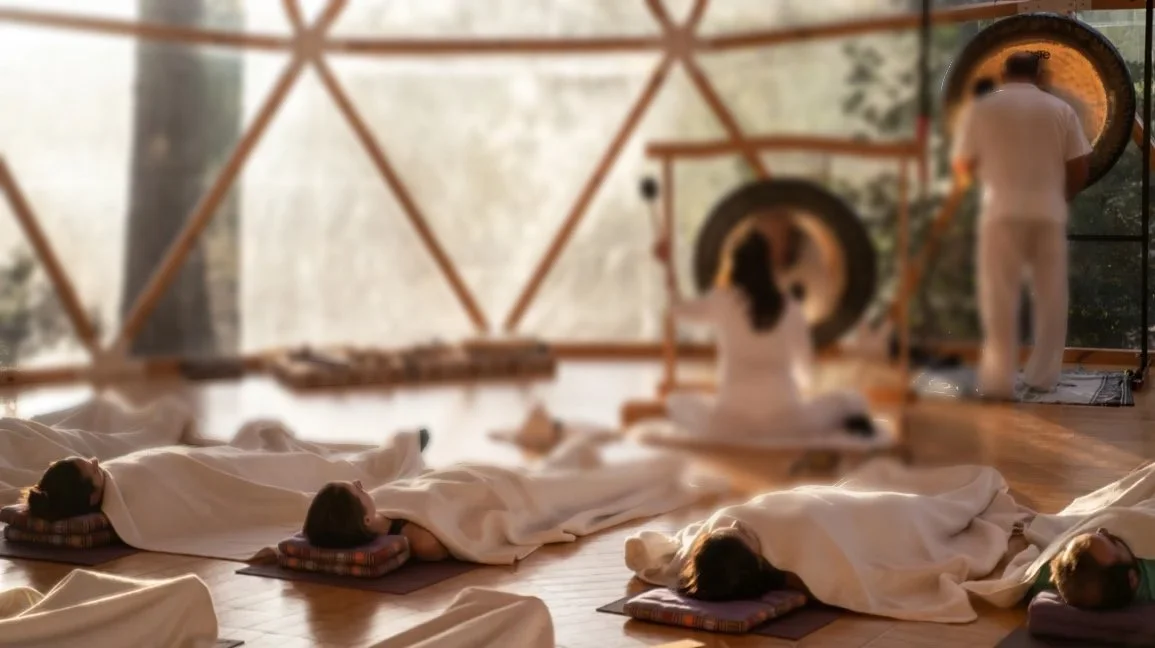
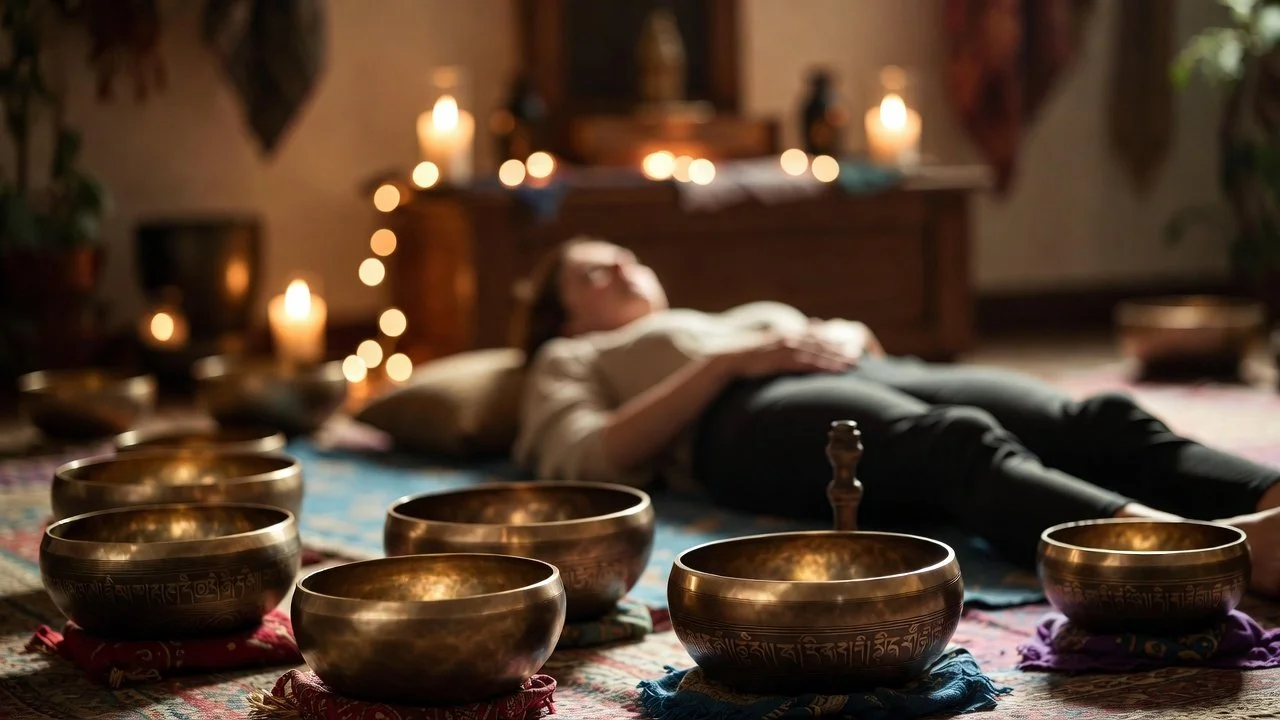
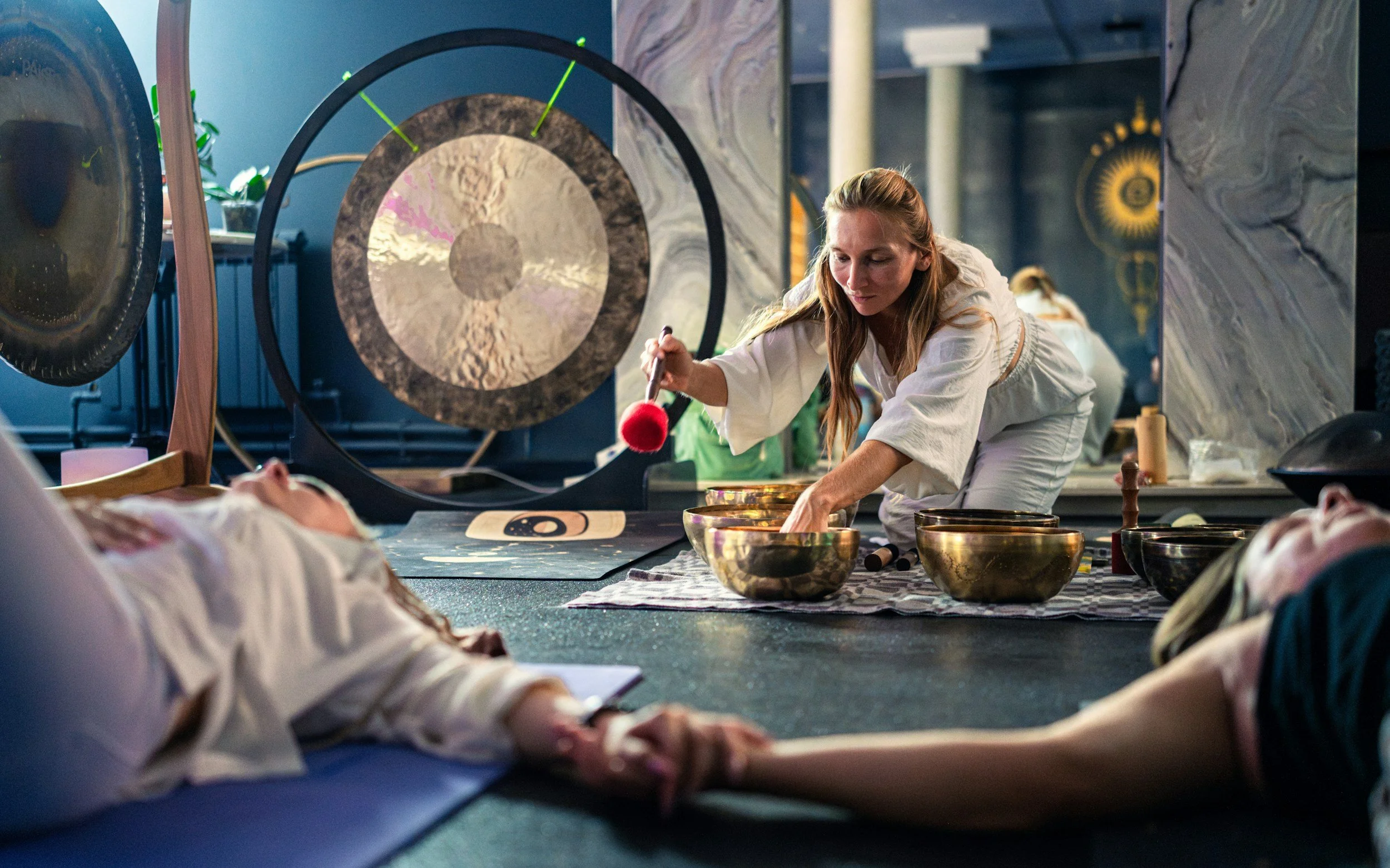
A sound healing session — often called a sound bath — uses instruments like singing bowls, gongs, chimes, and tuning forks to create layers of resonant sound and vibration. You typically lie down, get comfortable, and simply let the sound wash over you. There's no talking required, no analysis, no "homework." Your only job is to receive it.
What's actually happening in your body during this? The sustained tones and vibrations are believed to help shift your nervous system out of "fight or flight" mode (your sympathetic nervous system) and into a more relaxed, restorative state (your parasympathetic nervous system). Many people describe walking out of a session feeling like they've had a full night's sleep, even after just 45 minutes to an hour.
Sessions can be private or group-based:
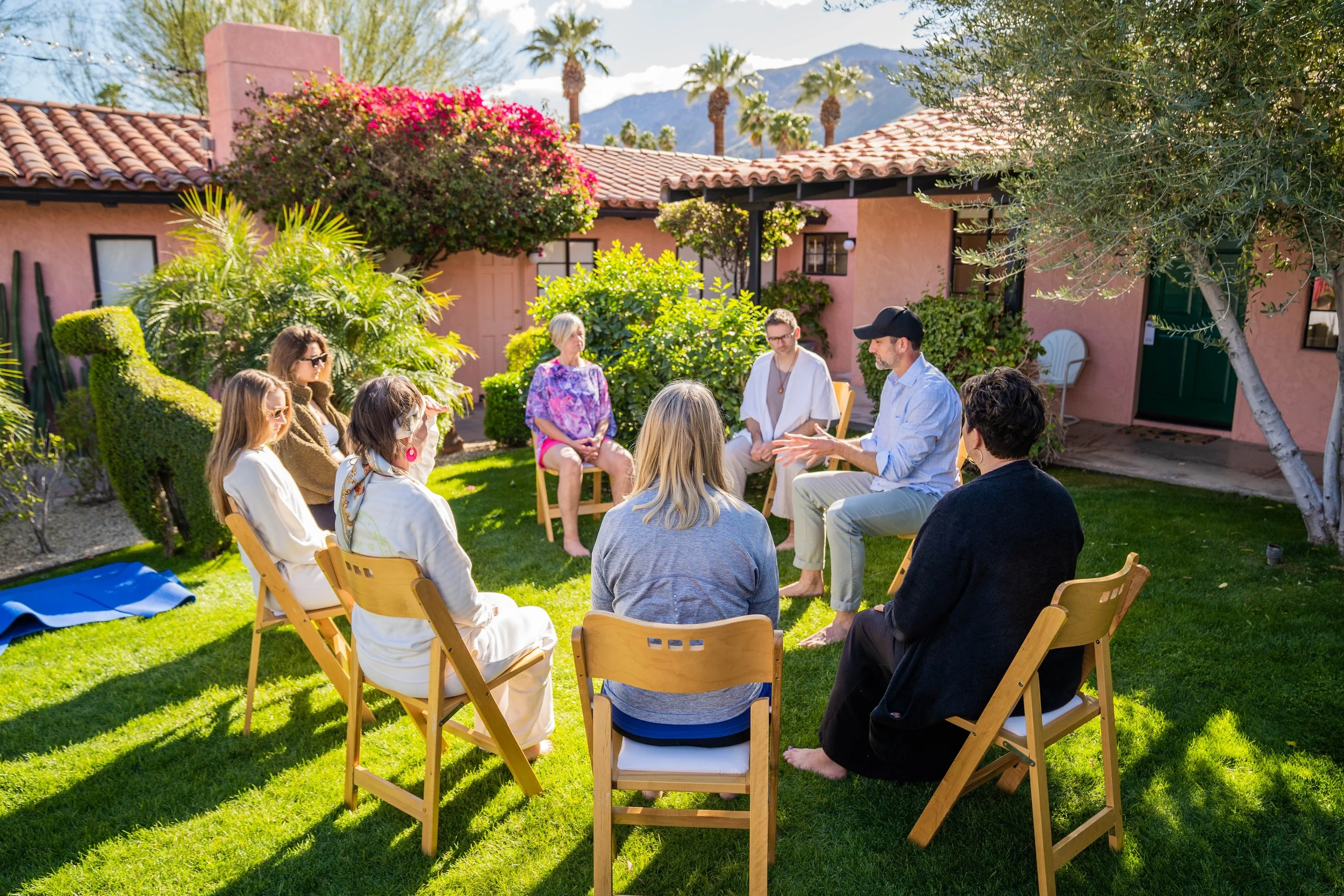
Group sound baths offer a shared, communal experience — often more affordable and social, great if you like the energy of a room full of people all settling down together.
Private sessions are tailored to you specifically — useful if you're working through something more personal, want a quieter space, or prefer one-on-one attention from a practitioner.
Neither is objectively "better" — it depends on what kind of experience helps you unwind.
How Counseling Works?
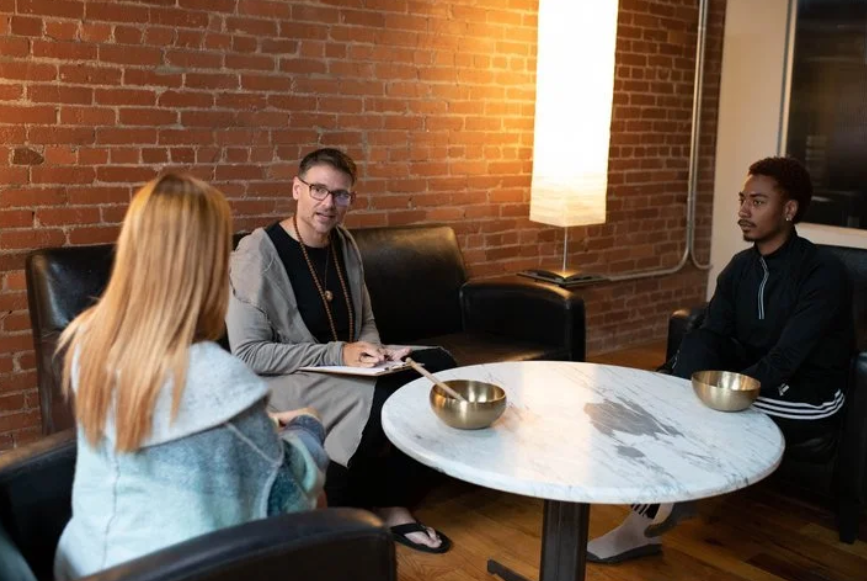
Counseling, on the other hand, is a structured, talk-based process with a licensed mental health professional. Sessions typically involve verbal processing — talking through specific challenges, patterns, relationships, or emotions — with a counselor trained to help you identify root causes, build coping strategies, and work toward defined goals over time.
Counseling is often:
Diagnostic and clinical — a counselor can assess and help treat specific mental health conditions (anxiety disorders, depression, trauma, etc.)
Goal-oriented — sessions build on each other over weeks or months, working toward measurable progress
Rooted in cognitive and behavioral tools — teaching you frameworks and strategies you can apply outside of sessions
This is a fundamentally different mechanism than sound healing. Counseling engages your mind directly through language and reflection. Sound healing engages your body directly through vibration and sensory experience. Both are valid paths to feeling better — they're just working through different doors.

What Each One Is Best For You?
Sound healing tends to be a great fit if you're dealing with:
General stress or overwhelm that doesn't have one specific "cause" you need to untangle
Burnout — that flattened, depleted feeling from too much output and not enough rest
Difficulty relaxing or sleeping
A desire to complement other wellness or mental health practices
Wanting a low-pressure, no-talking-required way to decompress
Counseling tends to be a better fit if you're dealing with:
A specific issue you need to process — grief, trauma, a major life transition, a relationship pattern
Ongoing mental health conditions that benefit from structured, clinical support
A need for accountability and measurable progress over time
Wanting tools and frameworks you can name and apply in daily life
If you're asking "which one do I need," a simple gut check: if you mostly feel like your body is overloaded and can't relax, sound healing is a strong first step. If you feel like there's something specific your mind needs to work through, counseling is likely the better starting point.
Can Sound Healing and Counseling Work Together?
Yes, and for a lot of people, this combination works better than either alone. Sound healing isn't a replacement for licensed mental health treatment, but it can be a powerful complement to it.
Here's how that often looks in practice: counseling gives you the tools and language to understand what you're going through and work through it intentionally. Sound healing gives your nervous system the chance to actually settle and rest something that's hard to access purely through conversation. Many people find that a regular sound bath practice makes their counseling work feel more sustainable, because they're not showing up to every session running on empty.
If you're currently in counseling and considering adding sound healing, there's no conflict here — it's simply adding another layer of support. And if you're not in counseling but are dealing with something that feels bigger than stress (ongoing anxiety, depression, unresolved trauma), sound healing can be a beautiful complement, but it's worth also connecting with a licensed counselor for that deeper work.
Who Should Try Sound Healing First?
If any of this sounds familiar, sound healing is worth trying:
You're stressed but can't point to one specific "problem" to solve
You're burnt out and need a reset, not another to-do list
You want a practice that doesn't require talking or analyzing
You're looking for something to pair with therapy you're already doing
You just want to feel calmer, more grounded, and more like yourself
The best way to understand the difference is to actually experience it. If you've never been to a sound bath before, our group sessions are a low-pressure way to try it out — no experience needed, just show up and lie down.
Ready to feel the difference for yourself?
Join us for Sound Bath Thursdays or Saturdays .
Curious about something more personal? Book a private sound healing session.
Dealing with burnout specifically? Check out our Floating Frequencies Sound Bath.
Want to go deeper and learn the practice yourself? Explore RIS Academy's training programs.
Sound healing and counseling aren't competing paths, they're different doors into the same goal: feeling more like yourself again. You don't have to choose one forever. Start with whichever one meets you where you are today.